


As a professional organizer, I will tell you the truth. You don’t actually have a “messy” personality. Instead, you have a systems problem. Most people treat tidying like a one-time event. They tackle a marathon weekend of cleaning, but the mess returns by Tuesday. If you want to create more breathing room, then you must focus on maintaining an organized system. These routines address the root cause of the mess: the constant flow of items into your home.
Understanding Your Stuff Limit
Before we dive into the daily routines, you must understand why your house gets messy. Everyone has a “stuff limit.” Think of this as your personal inventory threshold. It is the maximum amount of things you can manage before your home feels out of control.
When you own more items than you have the energy to manage, you aren’t lazy. You are simply outnumbered. Every object in your home requires a piece of your attention. This is what we call the mental load. If your inventory exceeds your ability to maintain it, no storage bin in the world will save you.
Therefore, these 12 habits for maintaining an organized system help you stay below that limit every day. By managing the flow of goods, you protect your time and your peace of mind.
12 Daily Habits for Maintaining an Organized System
These aren’t just chores. They are the organizing hacks I use to keep life organized. Choose a few to try today. The most important thing is to build these habits over time.
1. Use “One-in, One-out”
First, try the gold standard of organization. Did you buy a new sweater? Say goodbye to an old one. This habit ensures your home’s inventory stays steady. As a result, you never add more volume than your system can handle. This rule works for everything from kitchen gadgets to coffee mugs. If you bring a new item into the fold, an older version must leave.
2. Pause the Shopping Cart
Next, protect your space with a cart pause. If you really want something, leave it in your cart for at least forty-eight hours. Usually, that initial “gotta have it” feeling fades. You soon realize you don’t actually have a place for it in your current system. This simple delay stops impulse buys before they even reach your front porch.
3. Shop with a List
In addition, jot down exactly what you need before you leave for the store. Stick to that list like glue. Impulse buys act as the primary enemy of a clean home. This simple act helps you buy only what you have space for. Whether you are at the grocery store or a big-box retailer, the list keeps you focused on your goals.
4. Master Passive Tidying
Similarly, maintaining an organized system requires zero extra time if you move items as you go. Before you walk out of a room, grab one thing that belongs where you are going. This “passive” habit prevents piles from building up in the first place. For example, if you are heading to the kitchen, take that empty glass with you. It sounds small, but these tiny movements add up to a clean house.
5. Open Mail Over the Bin
Futhermore, stop moving mail from the door to the counter to the table. Instead, open it over the recycling bin. Shred the sensitive stuff and toss the junk immediately. This ensures that paper clutter never enters your system. Paper is one of the hardest things to manage once it piles up, so stop it at the source.
6. Ruthlessly Eliminate Clutter
Meanwhile, change the way you look at your belongings. Stop asking, “Can I use this?” and start asking, “Does this deserve space in my life?”
Be ruthless.
Your home is your most valuable asset. If you haven’t used an item in a year, it is just a weight holding your system back. Therefore, give yourself permission to let go of the maybe items.
7. Set a Donation Station
Because every system needs an exit strategy, keep a permanent basket in a closet. As soon as you realize you don’t need a gadget or a pair of shoes, drop it in. When it’s full, take it straight to the donation center. This keeps the flow of items moving out of your house. It makes the act of letting go feel like a natural part of your week.
8. Say “No thanks!” to Freebies
On the other hand, remember that “free” stuff often has a clutter cost. The next time someone tries to offload an item on you, remember that your space is valuable. You don’t have to be a storage unit for other people’s unwanted things. If they persist, just blame your professional organizing bestie!
9. Use the “Really Good Box”
Another great tip involves those cardboard boxes you’re saving. Use them as donation bins! Instead of letting it sit empty, fill it up and send it off. It is much easier to let go of a cardboard box than a nice basket. This is a great way to recycle while also clearing out your home.
10. Give Every Single Item a Home
Crucially, if an item lacks a specific spot, it is officially clutter. Maintaining an organized system only works if every item has a “home.” This means you know exactly where the scissors, the batteries, and the tape belong. If you can’t find a spot for it, you likely don’t have room for it in your current life.
11. Stop Thinking “Just in Case”
Also, stop keeping things because of “what if” fears. We often hold onto backups that we never use. If you can replace an item for less than $20 in less than 20 minutes, let it go. Your mental peace is worth more than a $5 backup whisk from 2019. This rule helps you clear out the “junk drawer” mentality for good.
12. Do a Monthly Reset
Finally, check in once a month. If the “stuff” feels heavy again, perform a quick 15-minute ruthless purge. Walk through your home with a trash bag and a donation bin. This helps you get back under your stuff limit and keeps your system running smoothly. It is like a “reset button” for your home.
The Bin Your Space Method in Action
When we work together, we don’t just put things in bins. We create a flow. Maintaining an organized system is about understanding that your home is a living, breathing space. It changes as you change. Perhaps you are “right-sizing” and moving to a smaller place. Or maybe you are a busy parent trying to keep up with school papers.
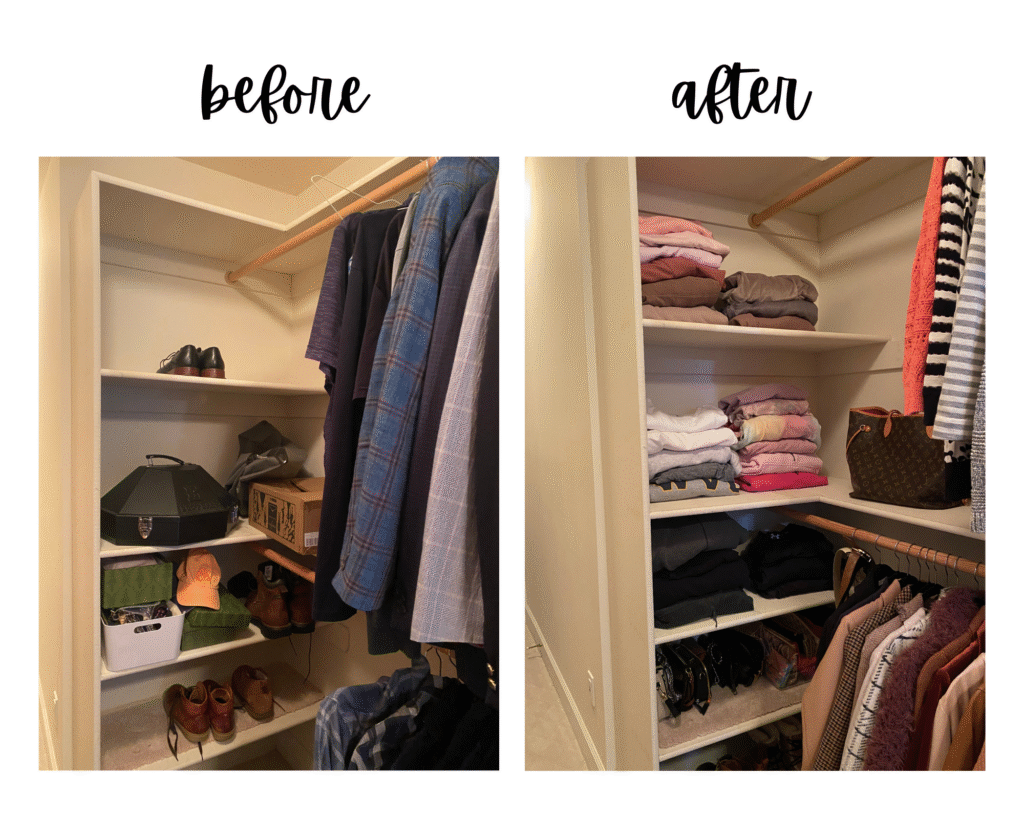
Whatever your season of life, the “Bin Your Space” method focuses on functionality over perfection. We want systems that work for your “real life,” not a museum. These twelve habits ensure that the hard work we do during an organizing session stays in place for years to come.
Final Thoughts on Maintaining an Organized System
Adopting these habits for maintaining an organized system won’t happen overnight. Habits are like muscles; they require repetition to get stronger. You might stumble some days, and that is okay. The goal isn’t to be perfect; the goal is to be intentional
Start with just one or two habits, like the “One-In, One-Out” rule, and build from there. Once those feel natural, add another.
Over time, you will notice that your home feels lighter. You will spend less time cleaning and more time living. Remember, a peaceful home results from small, ruthless decisions made every single day.
You deserve a space that gives you room to breathe.
Want more support to maintaining an organized system you have in place?
If you’re looking to organize your home but aren’t sure where to start, contact me. I offer in-person and virtual organizing sessions.
Whether you need a full overhaul or just a tune-up for maintaining an organized system, I am here to help. I can’t wait to help you feel more breathing room in your home.
Bonnie Hintenach
Professional Organizer | Bin Your Space


