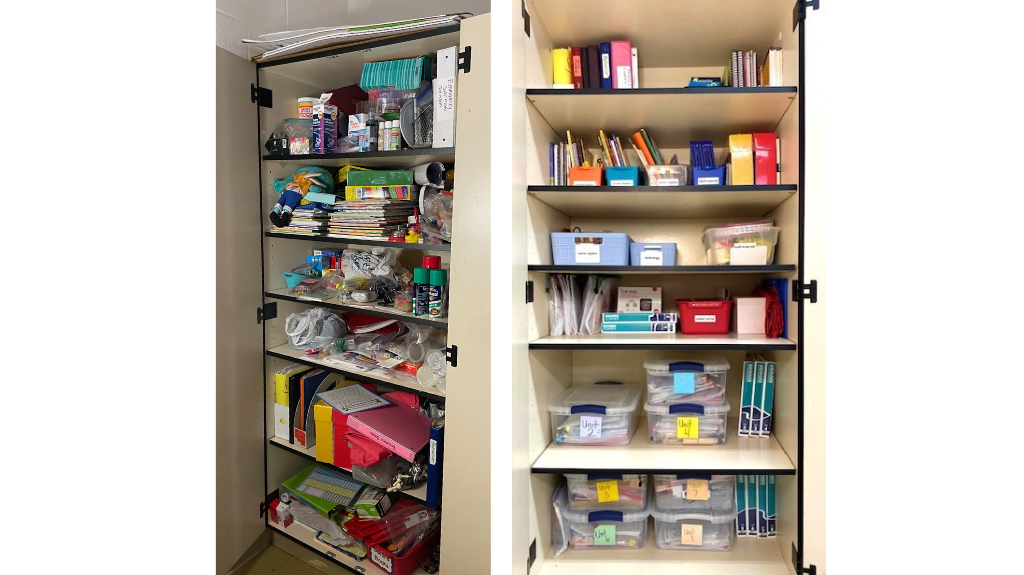
Do you ever wish your classroom organization stayed all year long? Between lesson planning, grading, calling parents, and writing reports, trying to keep up with classroom organization can feel like an impossible task.
I know how easy it is for a room to become messy. When that happens, the piles of papers and materials lead to stress and anxiety—not only for you but for your students too. What if I told you your whole room could actually stay organized the entire school year? What if you didn’t have to spend your time re-organizing at the end of every marking period?
Classroom Organization That STICKS
As a former elementary teacher, I deeply understand how a cluttered classroom can affect you, your students, and the learning environment. When you reorganize your classroom again and again, it takes precious time out of your day. And we know how precious time is for you already!
So, I’m sharing 5 classroom organization hacks teachers don’t talk about enough when setting up a sustainable system at the beginning of the school year.
1. Classroom Organization for Your Teacher Closet
Let’s be real. This is the closet where supplies go to disappear. Basically, this space becomes a dumping ground for random decor and old papers. However, this space has the potential to be a highly functional storage area for your materials.
Whether you have been in the same classroom for 15 years or you’re moving into a new classroom and have the previous teacher’s belongings stashed in your space, you need to ruthlessly declutter.
First, declutter the top shelf and work your way down. As you go, separate the items into keep, donate, and trash. Remember, you can’t keep organizing clutter so by evaluating what you need is important for your classroom to stay organized all year long.
2. Bulk Student Supplies
Secondly, when students can find and return their own materials, you save valuable teaching time. Good classroom organization empowers your students to be independent. However, I am not talking about their locker or desk. Instead, this is about organizing the extra supplies you have to store in your for when your students need these materials. Simply put, this is your backstock.
Here’s exactly how to set up this space:
- First, determine the storage location. This should be a place that is easy for students to get to but somewhere you can keep an eye on them.
- Next, unpack and dump the extra highlighters, glue sticks, pencils, notebooks, folders, and dry erase markers into separate bins.
- Then, label the bins with the materials you are storing in them.
Ultimately, the key is to eliminate distractions when you are in the middle of teaching. For example, by opening the packs of glue sticks now and keeping them in one bin, students will be able to grab and go when they need one.
3. The Monday Folder
Furthermore, implementing this Monday Folder system will keep you on schedule to grade papers. It also will help parents know when to expect their child’s work to come home.
In short, a Monday Folder is just that. It’s a folder that you send home with students every other Monday. On one side is their graded work from the last two weeks. On the other side lives a comment sheet. This is for the date, parent signature, and a comment/question from the parent.
Not only does this help you with classroom organization, but it is another form of parent communication. The signature quickly tells you whether or not parents saw their child’s work.
Additionally, the Monday Folder system will help you keep paper clutter down and actually grading papers. Whatever you do, don’t change it to a Friday Folder. One reason is because you will want the weekend to grade any papers you didn’t get to during the week. Second, I have learned the hard that Friday Folders often turn into lost folders by Monday morning.
Pro Tips:
- Use the same color for each Monday Folder.
- Prepare the folder with the student’s name and a label that says “Monday Folder” on the front.
- After the papers are graded, place the stack in the “Monday Folder” bin so the folders and papers to be sent home are all together.
(Below is the exact page from my Classroom Organization DIY Guide with this tip and more!)

4. Extra Papers
Just like you should have a bin for Monday Folders and graded papers, you should have a separate bin for “Extra Papers.” This will save you time and energy in finding an extra copy of a worksheet a student needs last minute.
In addition, when a student asks, “Can I have another copy of the math homework?” you can essentially point them in the direction of the extra papers bin. Then, students can look for the paper themselves. It puts the responsibility back on the student and you can continue teaching.
At the end of the week, month, or when this is full, you can recycle what you no longer need.
5. Small Groups and Their Materials
Most importantly, small group materials can quickly become disorganized when each group needs their own things.
To stay organized, name your groups the color of the bins you have. For example, if you green, blue, and orange bins, name the groups those same colors. Not only will this help keep you organized, it streamlines your classroom and cuts down on time with students looking for something they need.
Classroom Organization is My Specialty!
An organized classroom isn’t just a dream—it is a tool that makes your day go smoother. By starting small and tackling one area at a time, you gain back precious energy for what matters most: teaching!
Need More Personalized Support?
Are you ready to dive deeper into the BYS method? Let me help you organize your classroom!
- In-person organizing services for local teachers near Maryland
- Virtual coaching sessions 1-on-1 support no matter where you live.
- DIY Classroom Guide is my complete blueprint with step-by-step instructions for teachers!
Bonnie Hintenach
Professional Organizer for Homes, Schools, & Small Businesses