


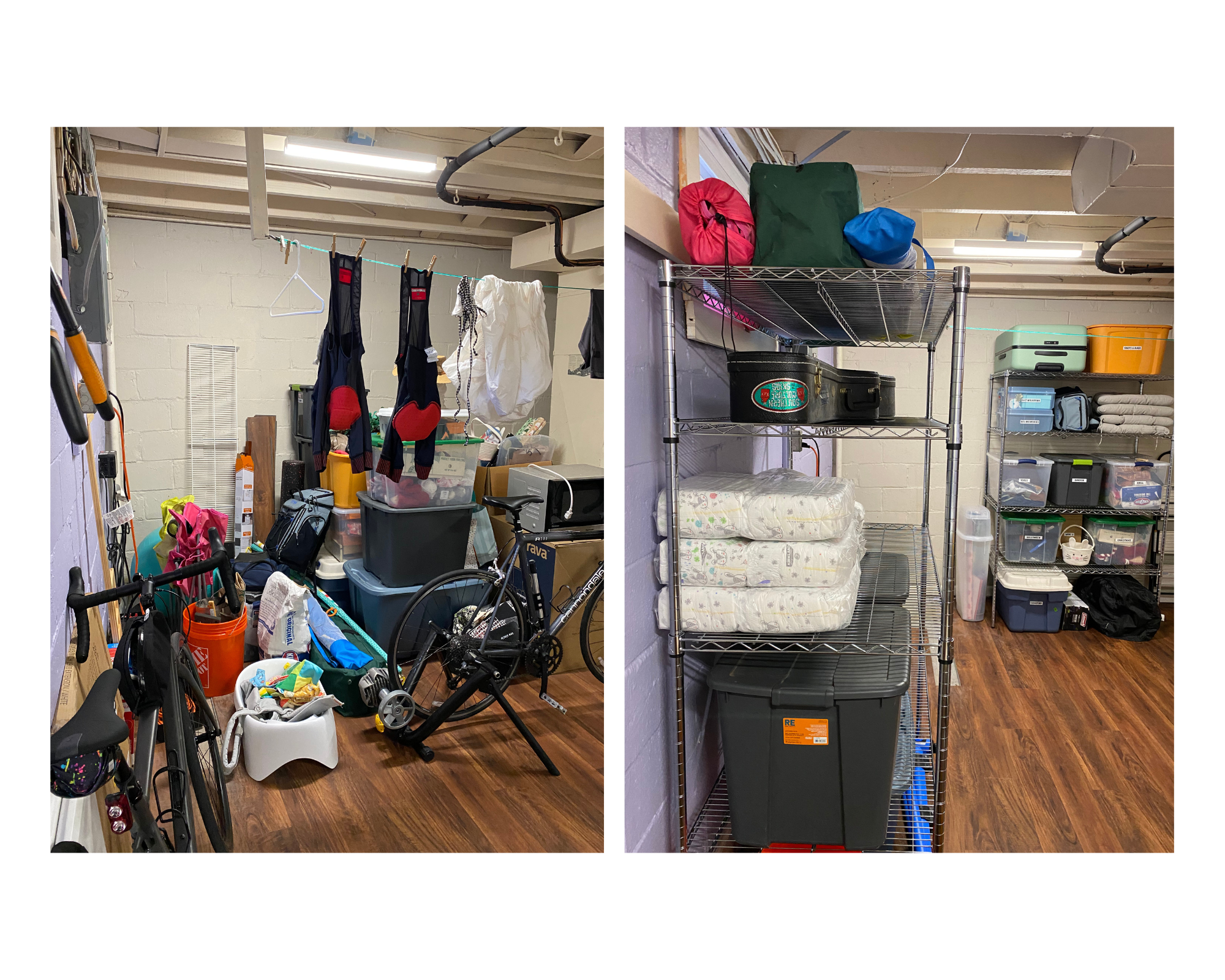
I think it’s time we get serious about our stuff. If you’ve been wondering how to ruthlessly declutter your home without feeling heartless, you are in the right place.
We all have it: the paper pile of mail sitting on the counter, the “I don’t wear that anymore” clothes hanging in the closet, and the books we never went back to reread. We keep pens just in case our favorite one runs out (spoiler: you already have plenty of pens), hold onto the endless junk in the kitchen drawer that belongs to nothing, and store old CDs or cassettes we can’t even play in our cars.
It’s time we get serious about clearing the chaos.
Making hard decisions about stuff we never use isn’t always easy. It means looking at the things that just sit there taking up space including items in your kitchen, China cabinet, and garage. But learning how to ruthlessly declutter doesn’t mean being cold, nor does it mean throwing away things you genuinely love or memory keepers that bring you pure joy.
It means stopping the excuses for the things that are draining your space, energy, and mental capacity. When you decide to ruthlessly declutter the extra, you aren’t losing anything. In fact, you are gaining room to breathe and true peace of mind.
Shifting Your Perspective on “Stuff”
Building the muscle of decluttering takes practice. It requires a shift in perspective where hard truths need to be front and center. To build that muscle, you have to start valuing:
- Breathing room over full shelves
- Intentionality over “just in case”
- Simplicity over extra knick-knacks
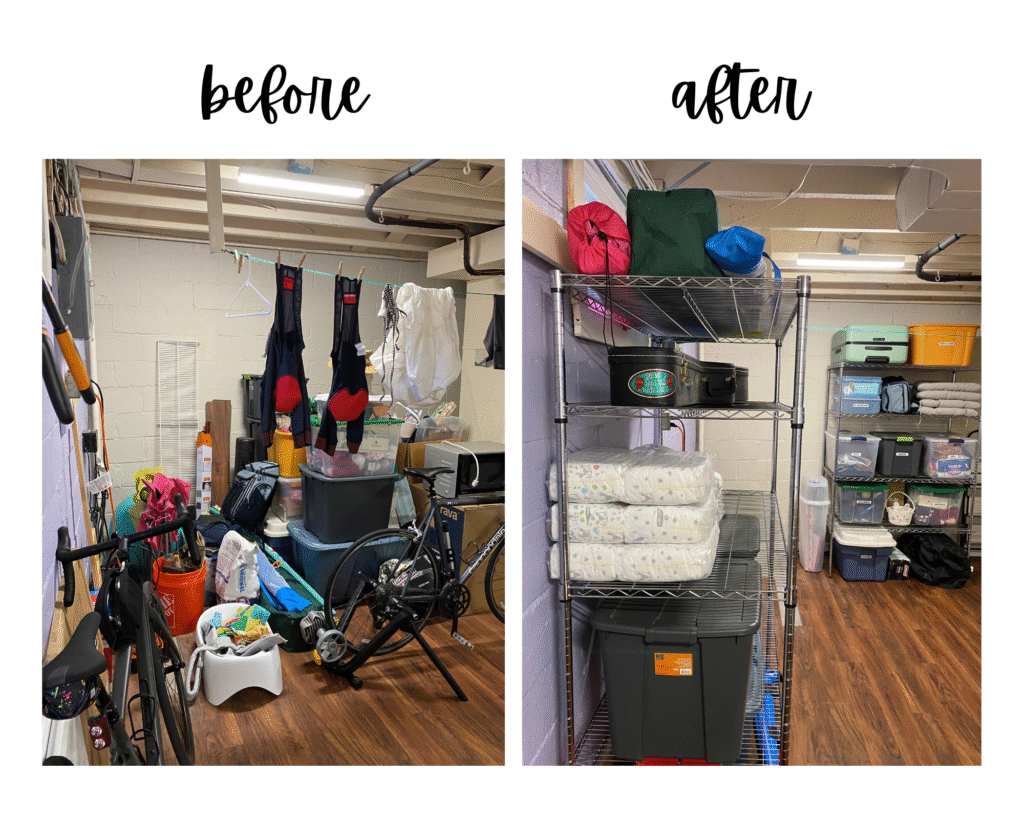
Learning how to ruthlessly declutter isn’t about renting a massive dumpster and throwing everything away. Instead, this is for the person who has kept everything since the year they were married in 1996. It’s for the one who buys new clothes, dishware, gadgets, or decor without letting go of the items those purchases were meant to replace. It’s for anyone holding onto baby clothes, pregnancy jeans, and old toys “just in case” there’s another child or grandchild down the road.
Stop looking at your space and saying, “I use all of this” or “I have nothing to get rid of.” Instead, start asking yourself the hard questions:
- How could I make room in this space?
- What is serving me well right now, and what serves my future?
- Is this supporting the life I’m living today, or the life I lived 10 years ago?
- If I needed this tomorrow, would I even remember I own it?
Overcoming Emotional Clutter Traps
Clutter isn’t just physical. It’s deeply emotional. In order to clear your home, you have to identify the specific mindset holding an item hostage and separate the emotion from the object.
The Guilt Trap
Typically, guilt disguises itself as obligation so saying to yourself I feel guilty about letting go of this item is the first step when you’re trying to figure out how to ruthlessly declutter. When this happens, one of the following three thoughts might run through your mind:
“I paid good money for that so throwing/giving it away is wasteful.” Or more commonly, “That was expensive!”
“My grandmother gave this to me. Getting rid of the item means I don’t appreciate or care about her.”
“I bought this for [insert project or hobby] I thought I would start and quitting feels like I’ve given up.”
Holding onto items out of guilt does not protect your peace. It taxes your present.
Every time you keep something out of guilt, it steals the prime real estate in your home. You are paying rent or mortgage monthly to have these items in your home that are causing you distress. Think about that for a moment. If you want to talk about saving money, start saving your physical space.
Additionally, unwanted items act as reminders of unfinished projects or unfulfilled obligations. Every glance adds to your daily mental load in a cycle that doesn’t seem to stop:
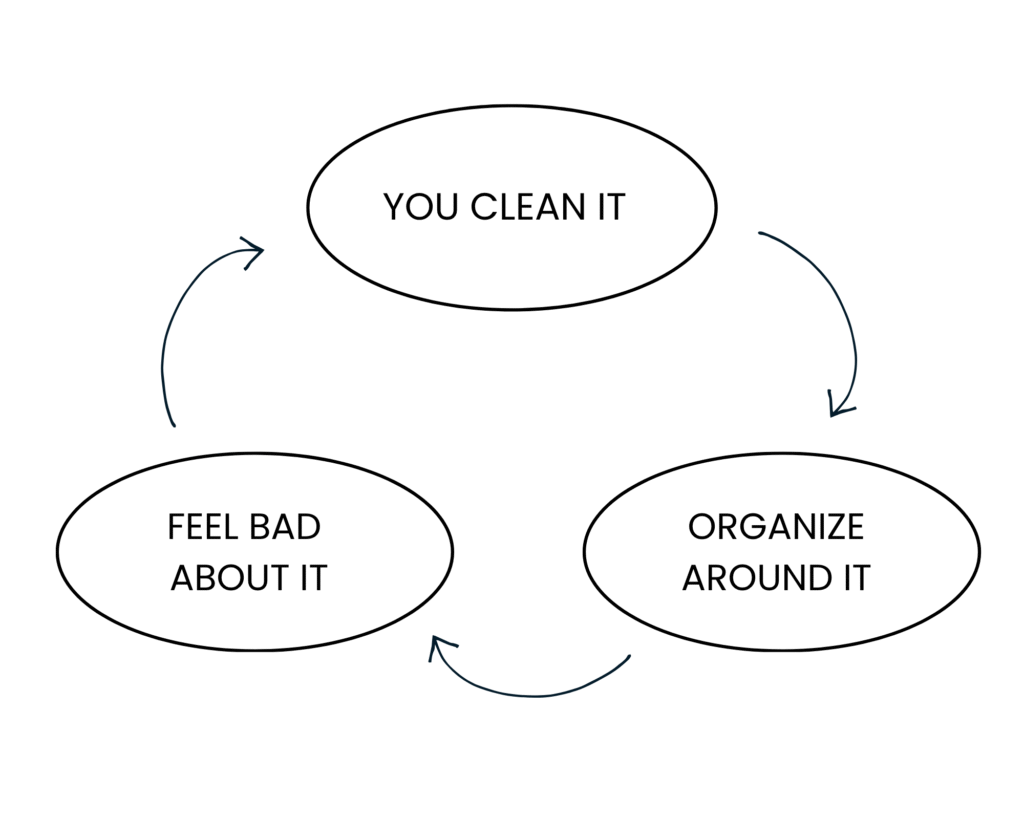
So, here’s the one thing you’re going to do to reclaim your space and reduce your mental load. You ready? You’re going to start separating the emotion from the item.
Here’s exactly how to shift your perspective:
- Gifts – The gift has already served its purpose the moment it was given to you. Once that moment passes, the item’s job is done. You are not keeping the love by keeping the object.
- Money – Keeping an unused $50 item does not bring the $50 back. It costs you functional space and there probably are other habits that need to be addressed in your spending or buying. (Don’t shoot the messenger… we’re being ruthless here.)
- Intention – Instead of focusing on what you are losing, focus on who could actually benefit from it now. Giving an item a second life removes the feeling of waste.
The Power of Passing It On: I recently helped a client declutter two gigantic yard statues taking up room in her home. Within an hour of dropping them off at the donation center, I saw a worker loading those exact statues into someone else’s car. The buyers were ecstatic. Passing items on transforms guilt into immediate impact.
The Habit Trap
Habitual clutter is the sneakiest clutter of all because it hides in plain sight. It consists of things you keep simply because they’ve always lived there.
Pay attention to your “autopilot” responses when you start to ruthlessly declutter:
- “I’ve had this since my first apartment.”
- “That’s just where the extra cords go.”
- “I might need a backup for the backup.”
Notice that none of those reasons say “This adds value to my life right now.” Items you ignore still require physical real estate, creating visual noise that makes a room feel heavy and full even when it’s clean.
How to Ruthlessly Declutter Step-by-Step
If you’re feeling stuck, you don’t have to tackle your entire home at once. Break it down based on where you are in your journey:
Level 1: Low-Stakes Practical Categories (For Beginners)
If you aren’t sure where to begin, start with functional spaces with minimal emotional attachment:
- Books you won’t reread
- Extra coffee mugs and surplus pens
- Duplicate kitchen utensils
- Unused craft or cleaning supplies
Level 2: High-Friction Categories (The Ruthless Challenge)
If you’ve already started and want a challenge, go after the items you’ve been keeping purely out of guilt or habit:
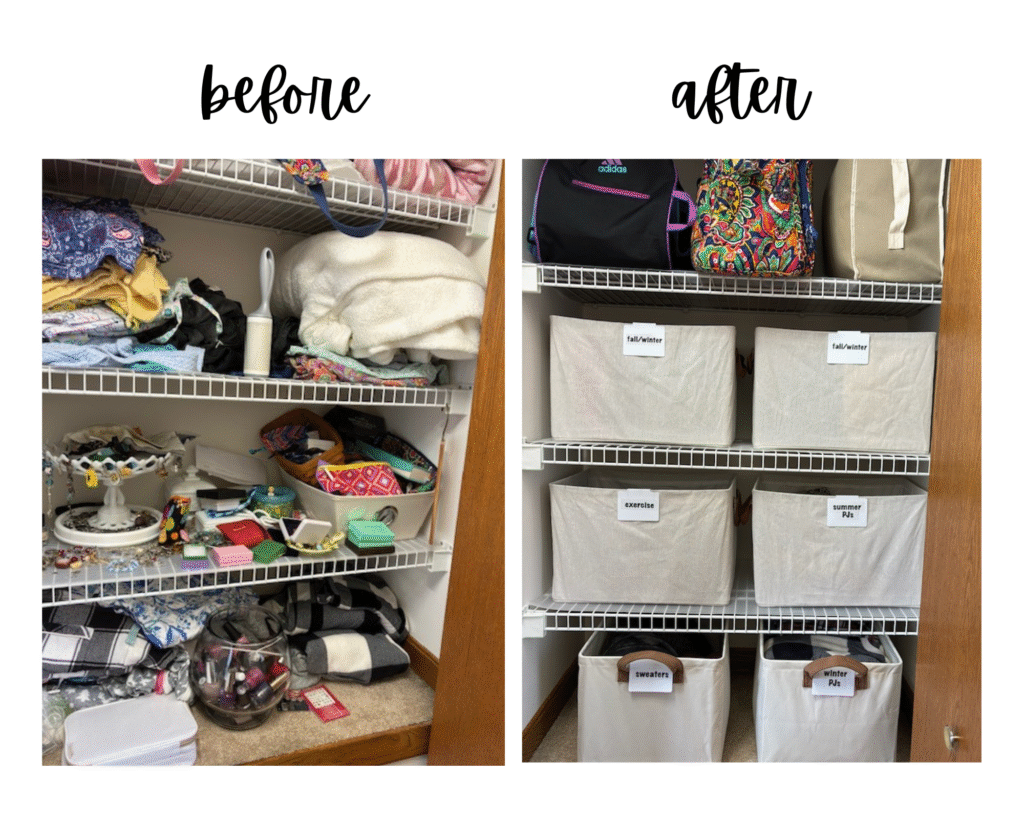
- Your closet (clothes that no longer fit your body or lifestyle)
- The “just in case” stash in your garage or basement
- Outdated seasonal decor you no longer love
- Memory boxes and inherited pieces that don’t fit your life
Take Action and Ruthlessly Declutter Today
Don’t wait until you’re forced to downsize in an emergency. Take your space seriously today.
Pick one category right now. Find 5 items you have been keeping purely out of guilt or habit. Acknowledge the feeling, thank the item for its past purpose, and set it free.
Your space should reflect where you are going, not just where you’ve been. Let’s make room for what matters!
Other Resources and Support to Ruthlessly Declutter
Build the habit of decluttering with my easy to follow checklist: Declutter Your Home in Just 5 Minutes a Day. Buy your copy on Etsy!
Work with me: Whether you want to work in-person or virtually, let’s chat about the space that’s causing you the most stress. Contact me by completing my simple inquiry form.
Read a previous Room to Breathe blog post: Why Your Kids Need to Learn to Declutter (& How to Teach Them)


